Stage, early May 2026 in GermanyGermanyGermany

  • early May: Camberwell Beauty (Nymphalis antiopa)
    GermanyGermanyGermanyGermany /PicturesNA/Misc/check_edc401.png rare
    Brandenburg /PicturesNA/Misc/check_008d03.png common
    Berlin /PicturesNA/Misc/check_008d03.png common
    Bremen /PicturesNA/Misc/minus_2f2f2f.png extinct
    Baden-Württemberg /PicturesNA/Misc/check_008d03.png common
    Bavaria /PicturesNA/Misc/check_008d03.png common
    Hesse /PicturesNA/Misc/check_ce0705.png very rare
    Hamburg /PicturesNA/Misc/check_008d03.png common
    Mecklenburg–Western Pomerania /PicturesNA/Misc/check_008d03.png common
    Lower Saxony /PicturesNA/Misc/check_008d03.png common
    North Rhine-Westphalia /PicturesNA/Misc/check_ce0705.png very rare
    Rhineland-Palatinate /PicturesNA/Misc/check_edc401.png rare
    Schleswig-Holstein /PicturesNA/Misc/check_edc401.png rare
    Saarland /PicturesNA/Misc/check_008d03.png common
    Saxony /PicturesNA/Misc/check_008d03.png common
    Saxony Anhalt /PicturesNA/Misc/check_008d03.png common
    Thuringia /PicturesNA/Misc/check_008d03.png common
    /PicturesNA/ButterflyLogos/Nymphalis_antiopa_logo_36_26.png
    Butterfly
For species protection reasons, finding places of butterflies on maps are accidentally moved by a maximum of 1 kilometers.
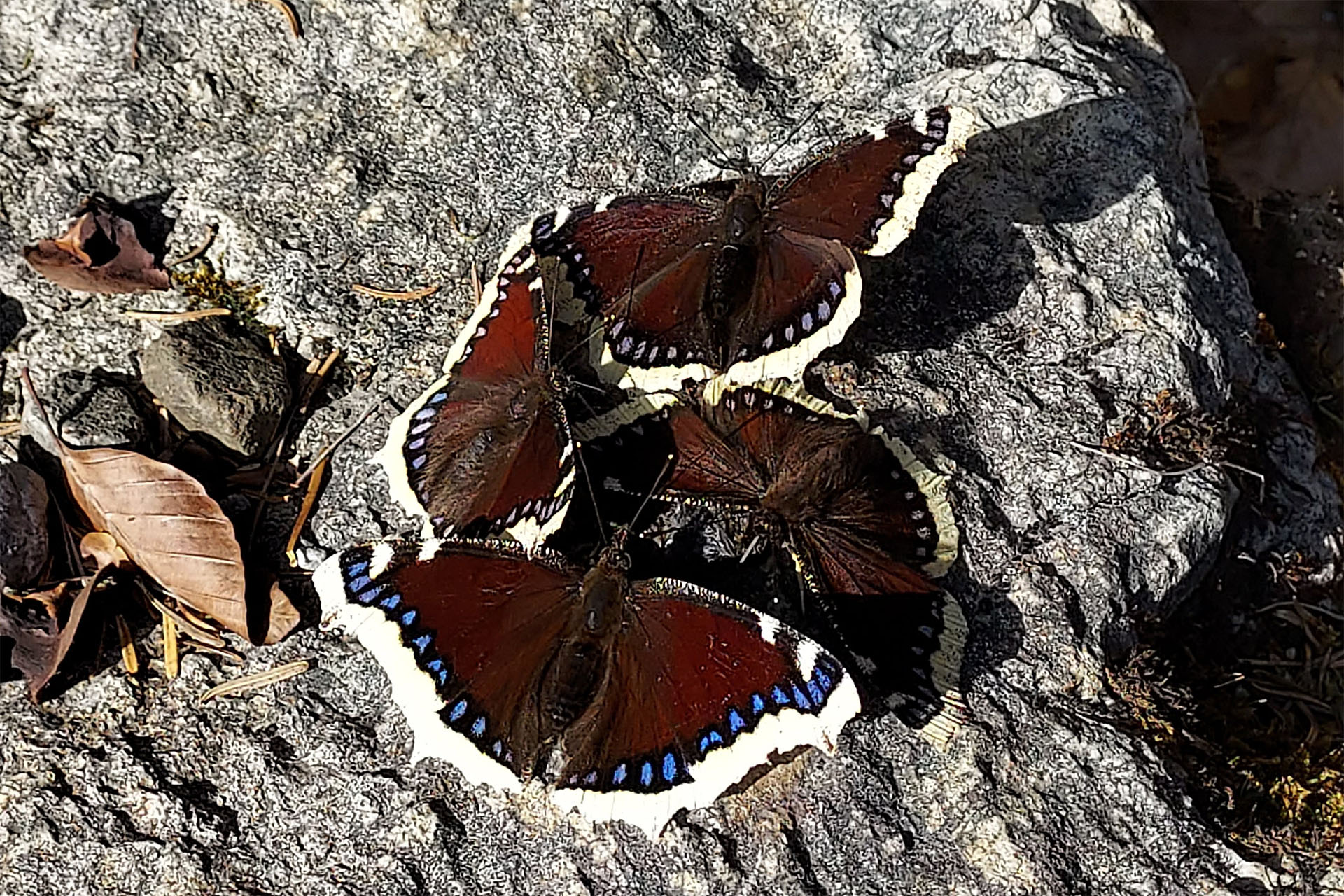
Four sucking Camberwell Beauties (Nymphalis antiopa)

Camberwell Beauty (Nymphalis antiopa)Camberwell BeautyNymphalis antiopa (Linnaeus, 1758)Mourning CloakCamberwell Beauty

Four sucking Camberwell Beauties (Nymphalis antiopa)

Carsten Bischoff discovered these four Camberwell Beauties (Nymphalis antiopa), which were likely feeding on animal droppings. All the butterflies emerged from hibernation virtually unscathed.

Photograph: Birgit IselbornBirgit Iselborn; Bad Wiessee, Bavaria, /PicturesNA/Flags/de.pngGermanyBad Wiessee, Bavaria, /PicturesNA/Flags/de.pngGermanyBavaria, /PicturesNA/Flags/de.pngGermany/PicturesNA/Flags/de.pngGermany (14. April 2026, 03:04 PM)